Why GRT needs a Frequent Transit Network
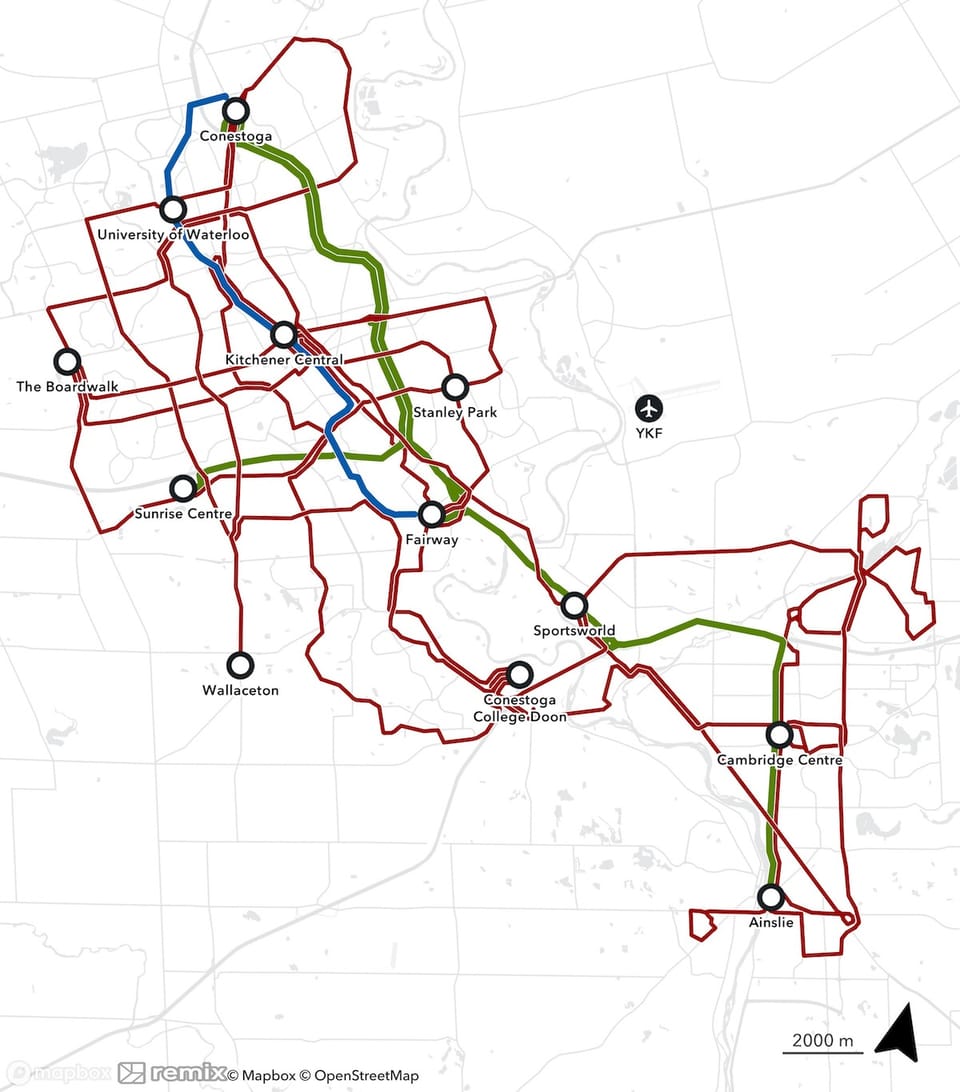
Grand River Transit’s 2025 Business Plan is an ambitious plan with many exciting goals, one of which is establishing a Frequent Transit Network. On 16 core routes in Cambridge, Kitchener, and Waterloo, the bus would arrive every 10 minutes on weekdays from 7 a.m. - 7 p.m., and every 15 minutes all other times.
It’s hard to overstate how transformational this would be to our transit network. Increasing frequencies across the board all-day will create a more seamless, convenient, and efficient network, enabling transit to be more competitive with driving.
This post is the first in a series explaining why Waterloo Region needs a Frequent Transit Network, how we can get there, and everything in between. Let’s start at the why.
Do you want to have the Frequent Transit Network posts delivered directly to your inbox? Consider subscribing to our newsletters!
The freedom of comprehensive frequent service
Let’s imagine you need to go to a doctor’s appointment. Fortunately, it’s only 20 minutes to the doctor's office by bus. How convenient! Except, you won’t be going anywhere until 20 minutes later because the bus comes every half hour. That’s 20 minutes you don’t have. Depending on how important this appointment is, you may decide to pay extra for a taxi or ride-share, or you miss the appointment because you can’t arrive on time.
Now imagine you take this bus to work. You’re diligent. You know that missing your bus means being late for work, so you make sure to arrive early to the bus stop every morning. What happens if there is a breakdown and your bus doesn’t arrive? What if you’re busier in the morning than anticipated and leave the house too late? You’re out of luck because the next bus won’t be coming for another half-hour – far too late.
Infrequent service made what should’ve been straightforward bus trips into inconvenient trips that you cannot rely on. Instead of transit fitting into your schedule, transit only works if you can plan around its schedule.
Now instead, let’s reimagine this bus route as having frequent 10 minute service. You can make that doctor’s appointment by bus. You can confidently take transit to work without running the risk of being late. Transit has become much more useful. It fits into your schedule.
And since you’re waiting less, you can travel further and reach more destinations in the same amount of time. The buses aren’t faster, but it’s a faster service. This is the core logic behind the claim of “riders will be able to reach approximately 38,000 more people and 15,000 more jobs within a one-hour trip compared to today” in GRT’s business plan.
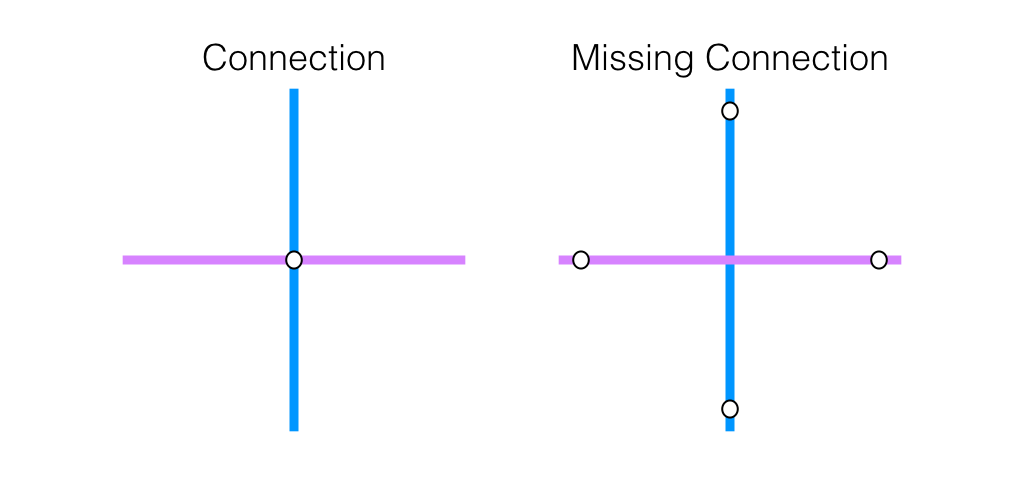
In addition, frequency is particularly important in GRT’s network. Many of its bus routes run every 30 minutes or more, making transfers impractical and spontaneous travel very inconvenient. GRT's bus routes are arranged in a grid with the ION light rail as a spine, forcing many trips to involve at least one transfer. Frequent service that runs every 10-15 minutes makes waiting for the next bus much more bearable and cross-route travel feasible by transit.
When transit comes often enough, taking transit stops being a meticulously planned activity. This is why Jarrett Walker of Human Transit says “frequency is freedom” – the freedom to go anywhere, whenever you want.
Frequent service needs to be all day
Notably, the GRT Business Plan includes frequent service past the traditional 9am to 5pm weekday commuting schedule.
This is essential as there are all sorts of journeys that people need to make outside of a workday. Families need to pick up and drop off kids at afterschool extracurriculars. Hospitality, part-time, and other workers with atypical hours need to be able to go to work and home in the early morning or evening. Even those working a 9 to 5 will need to run errands or want to take a leisure trip after work and on the weekends.
By extending frequent transit to all day, every day, including weekends, transit will be able to serve these trips, ensuring transit freedom whenever riders need it.
The ION LRT is an excellent transit line. One reason why is that it’s frequent the whole day. On weekdays, the train arrives every 10 minutes from 6 AM to 7 PM. On weekends and evenings, trains arrive every 15 minutes. That kind of frequency lets more people decide to take transit!
My wife who enjoys the convenience of driving has begun using the ION on weekends when we’re attending community events, because the LRT runs frequently enough it becomes a viable alternative to her car – Nigel Gordijk (via CityNews)
When there was a proposal to increase ION LRT peak service at the expense of decreasing off-peak service to 30 minute periods, residents spoke up and the proposal was amended to maintain the original frequencies.
Frequent transit is competitive transit
Despite Waterloo Region having a fairly impressive transit system for its size, according to the 2022 Transportation Tomorrow Survey, 83% of weekday trips are still completed by car, with only 4.5% completed by public transit. (Regional staff suggest this underreports transit usage in Waterloo Region.) With a frequent network, we can do better!
We can draw lessons from a group whose use of transit has grown: post-secondary students. With the introduction of the U-Pass system and frequent routes near post-secondary institutions, it is affordable and convenient for students. By meeting students’ needs, GRT reaped the double reward of considerable ridership growth and continued service expansion in the past decade.
That success with students created a challenge with the recent drop in international post-secondary enrollment. Ridership decreased by 17% in the first quarter of 2025 over 2024; and all remaining 2025 service expansion plans were shelved due to lower ridership projections. To expand the impact of GRT sustainably, it needs to improve its appeal to other populations and areas – and frequency is a key way to make transit more competitive for more riders.
In North America, transit has a reputation problem, often viewed as slow and inconvenient, an option of last resort. As Jarrett Walker writes, imagine a gate at the end of your driveway that opens only once every 30 minutes. How limiting and frustrating would that be? If you had the means, you’d almost certainly pick a different way of getting around.
This is what transit feels like when it’s infrequent, and it’s holding back what is otherwise an excellent transit system in Waterloo Region. The network is extensive, with stops available within walking distance in most neighbourhoods, urban and suburban alike. Compared to the car, transit is highly affordable, an important advantage as we continue to live through a cost-of-living crisis. The last major hurdle is improving convenience and dependability, which is exactly what increasing frequency region-wide will do.
It may seem impossible to convince drivers to leave their cars at home, but it’s been done before. By investing in an all-day frequent bus transit system, Toronto massively grew its transit ridership in the 1960s, reversing previous expectations of decline and convincing many car-owning suburban residents to take the bus!
If we want people to choose transit for more of their trips across Waterloo Region, we need to make transit appealing beyond its current rider base. The way to do that is by creating a frequent transit network.