GO trains for Cambridge
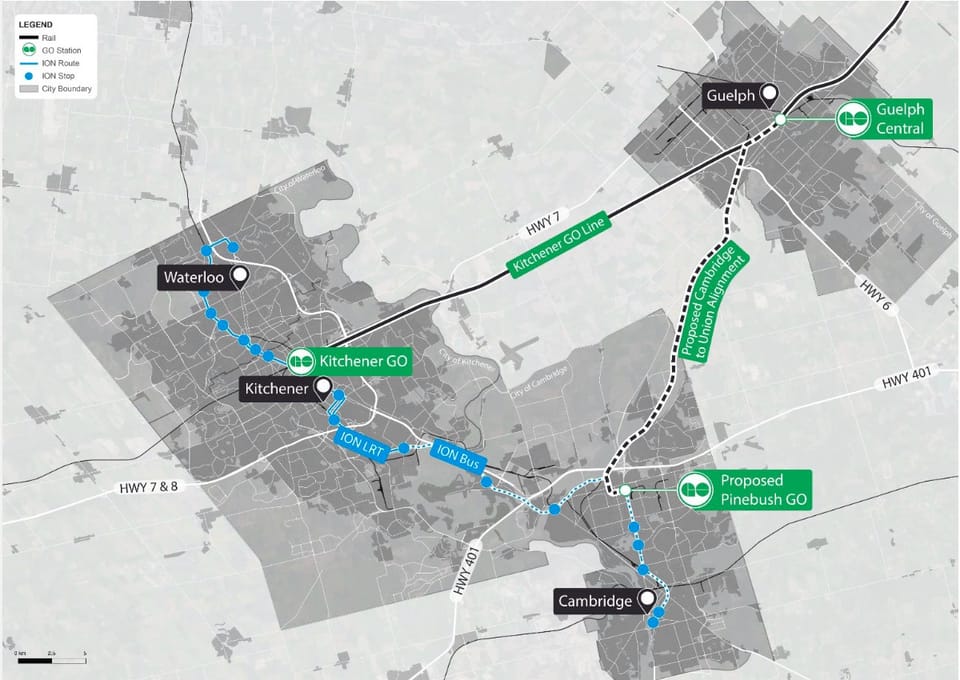
Across Waterloo Region, momentum for better regional rail service has been building. But while work is finally underway to improve service on the Kitchener GO line, Cambridge is being left behind – with over 140,000 residents, it remains the largest city in Ontario without passenger rail service.
Within Waterloo Region, connections between Cambridge and Kitchener-Waterloo have substantially improved in recent years with several bus routes, and the planned extension of ION light rail from Kitchener to Cambridge will strengthen them further.
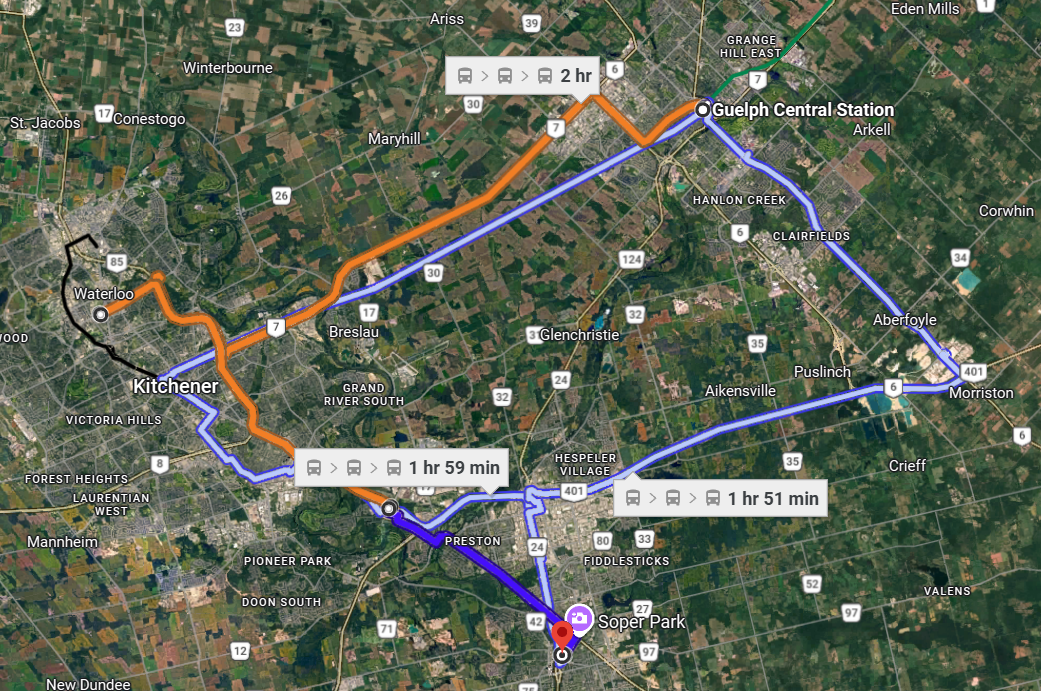
Since passenger trains to London and Toronto were cancelled in 1971, Cambridge residents have had to rely on congested highways like the 401 to reach the rest of Southern Ontario. The hourly GO 25 bus to Milton and Mississauga has improved regional connectivity, however there is no direct transit link to nearby cities like Brantford, Guelph, Woodstock, or Hamilton. Those not driving have to take several buses to reach their destination, making the trip take several times longer than by car.
Better intercity connections linking Cambridge to the Greater Golden Horseshoe area are needed, especially as many commute to or from the city. In this post we will discuss the studies to date and make some recommendations on what should be done next.
The Cambridge GO project
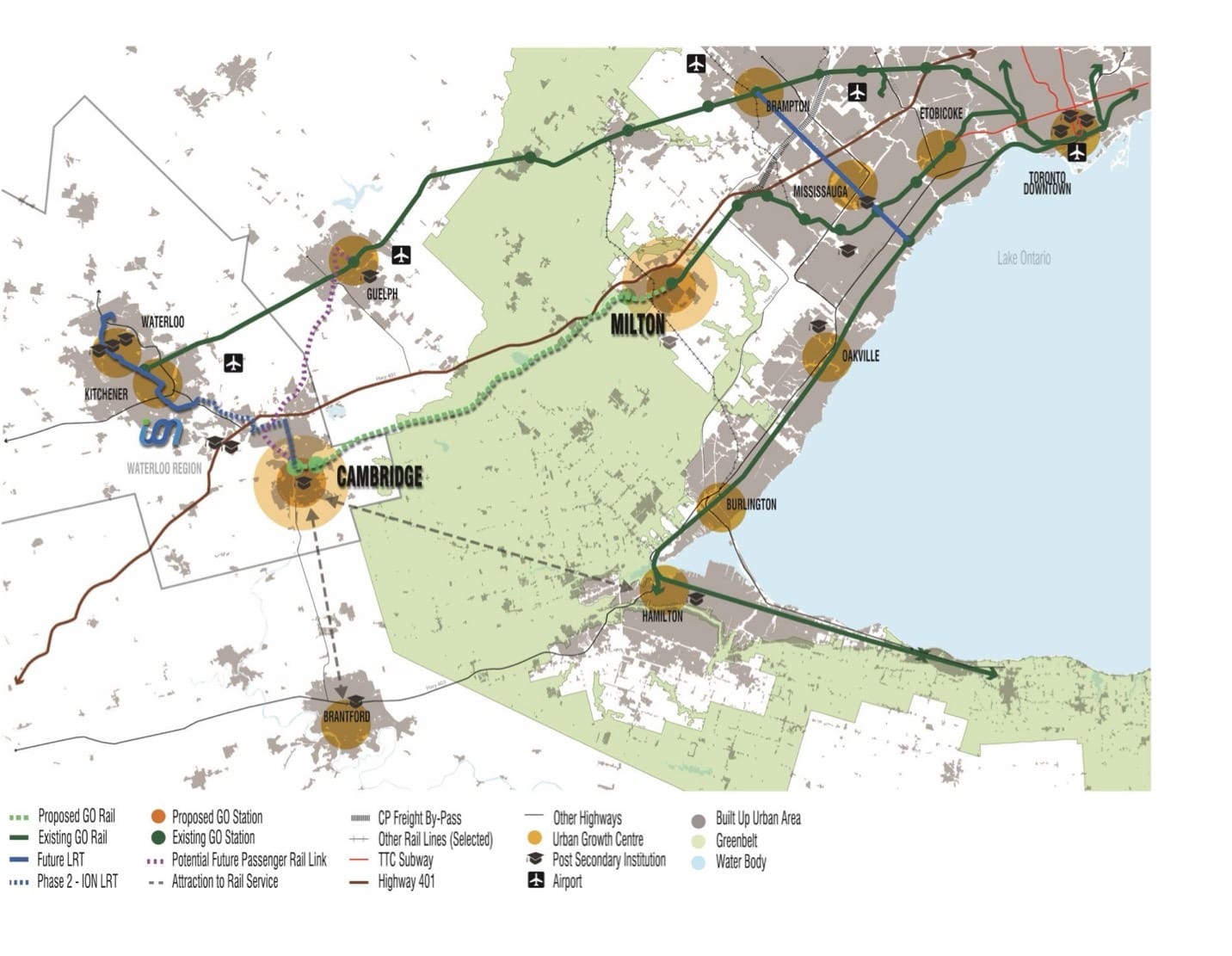
Several iterations of Cambridge GO studies have one main goal: connect Cambridge to the Greater Golden Horseshoe by rail, giving commuters a fast, reliable alternative to Highway 401.
Two routes have been proposed:
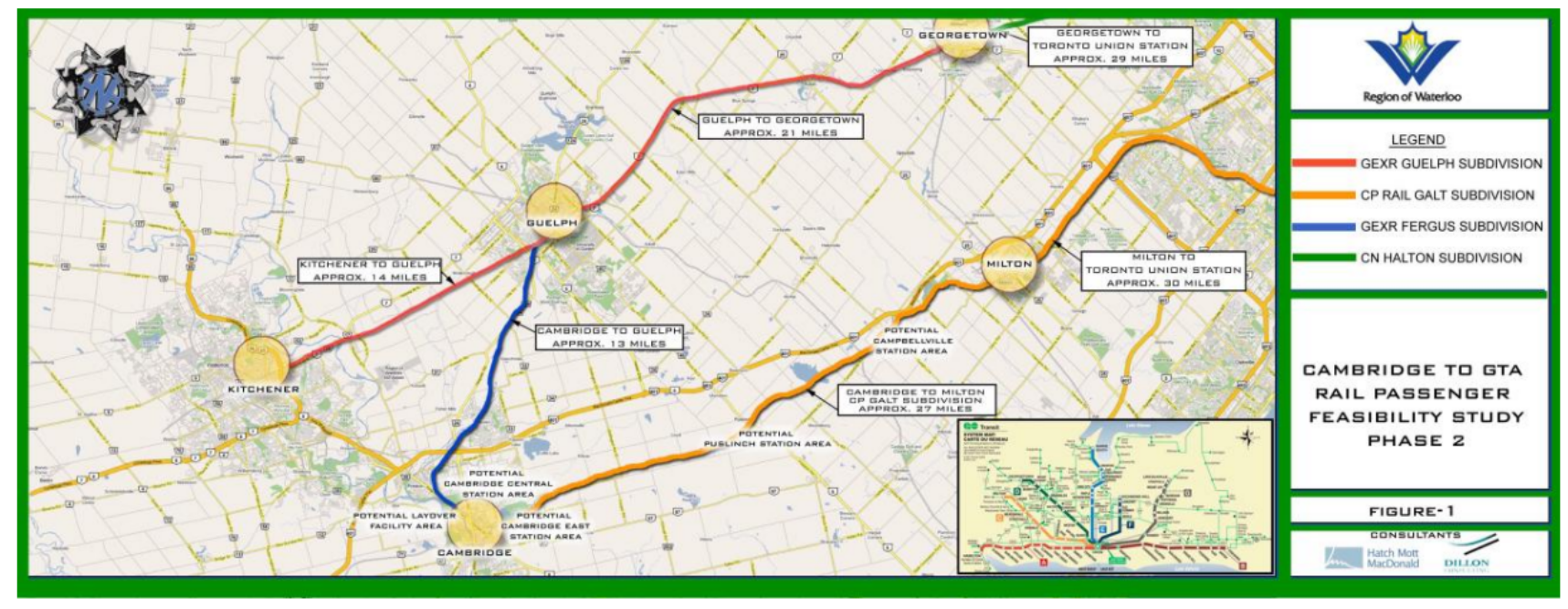
- Milton extension: extending the Milton GO line west along Canadian Pacific Kansas City (CPKC)’s Galt subdivision into downtown Galt (earlier proposal)
- Guelph branch: running a rail shuttle from a new Pinebush station to Guelph Central Station via Canadian National's (CN)’s Fergus subdivision, where riders would transfer to the Kitchener line for service to Brampton and Downtown Toronto (current proposal)
Recent focus has been on the Guelph route, since it’s expected to draw more riders and be easier to construct.
Two types of trains could be used: The line could either be operated by a) conventional GO trains, or b) smaller multiple unit trains, similar to Ottawa’s Line 2. The initial business case for the most recent project prefers Diesel Multiple Units (DMUs) or Battery Electric Multiple Units (BEMUs).
Cambridge and the Region of Waterloo have advocated for GO train service for the better part of two decades, with the first major plan being released in 2009. However, to date, upper level governments have not been publicly supportive of these requests. The Region of Waterloo unveiled the newest business case for Cambridge GO in 2024, building on a 2021 report. Metrolinx, the agency in charge of GO trains, has been fairly quiet on the latest proposal despite promising findings. Metrolinx has several dozen active projects underway and has historically prioritized improving existing lines to two-way all-day standards over new expansions (apart from Bowmanville). However, Premier Doug Ford has recently pitched the “GO 2.0” expansion project, which includes improved service on the Milton Line.
There is now widespread support for the 2024 plan, which was well received by the media and transit experts. Recent Cambridge Mayor Jan Liggett and Regional Councillor Doug Craig have also advocated for GO train service. The 2024 business case suggests that a rail connection would generate enough ridership and economic activity to justify the investment, with a relatively high cost-benefit ratio.
This is why we believe that GO train service to Cambridge should be included in the GO 2.0 plan, as support from Metrolinx is vital for any project to proceed. We will discuss the merits and considerations of the two proposed routes below:
The Cambridge-Milton Route [Galt Subdivision]
In 2015, Cambridge developed a business case for a DMU shuttle service from Galt to the Milton GO station, where customers could transfer to the Milton line. The same business case also examined a direct extension of the GO Milton line from its current terminus at Milton to a station in Galt. Because of its direct alignment to Toronto (allowing a 1 ½ hour trip from downtown Cambridge to Union station), as well as its fairly easy integration with the GO train network, this was considered the preferred route by regional consultants until 2021.
There are major issues that have prevented this option from going forward. The tracks are owned by Canadian Pacific Kansas City (CPKC), a private freight railway. The company is reluctant to have passenger trains running on its tracks, even if there is enough capacity for both freight and passenger trains to coexist. From what information we can find, the core section of the Milton gets at most 15 freight trains per day per direction, comparable to the Georgetown-Bramalea section of the Kitchener line (owned by CN) which gets half hourly passenger rail service already at peak times.
While CPKC is not entirely opposed to passenger service, it generally requires transit agencies to build dedicated passenger tracks alongside its right-of-way, which entails expensive new bridges and viaducts (as in the Bowmanville GO extension and Calgary–Banff service). Proposals for two-way, all-day (2WAD) service on the Milton line (the 50 km from Milton to Union) are estimated to cost over $6 billion; building new tracks to Cambridge would likely cost billions for similar frequent service. Moreover, there is no significant population centre between Cambridge and Milton and, with most of this land in the Greenbelt, it is not likely to be developed.
Frequent hourly service would be contingent on Milton getting 2WAD service which is much further away than frequent hourly service on the Kitchener Line. An interim extension of Milton line service would likely have under 10 trains a day, arriving only at peak times (similar to the existing Milton Line service). Passengers would still have to use a shuttle bus most of the day until expensive upgrades are complete.
Even though this proposal would offer a direct service to downtown Toronto and could be slightly faster than other options, high costs and engineering challenges – even to establish a basic service – significantly reduce the viability of the project.
The Cambridge-Guelph Route [Fergus Subdivision]
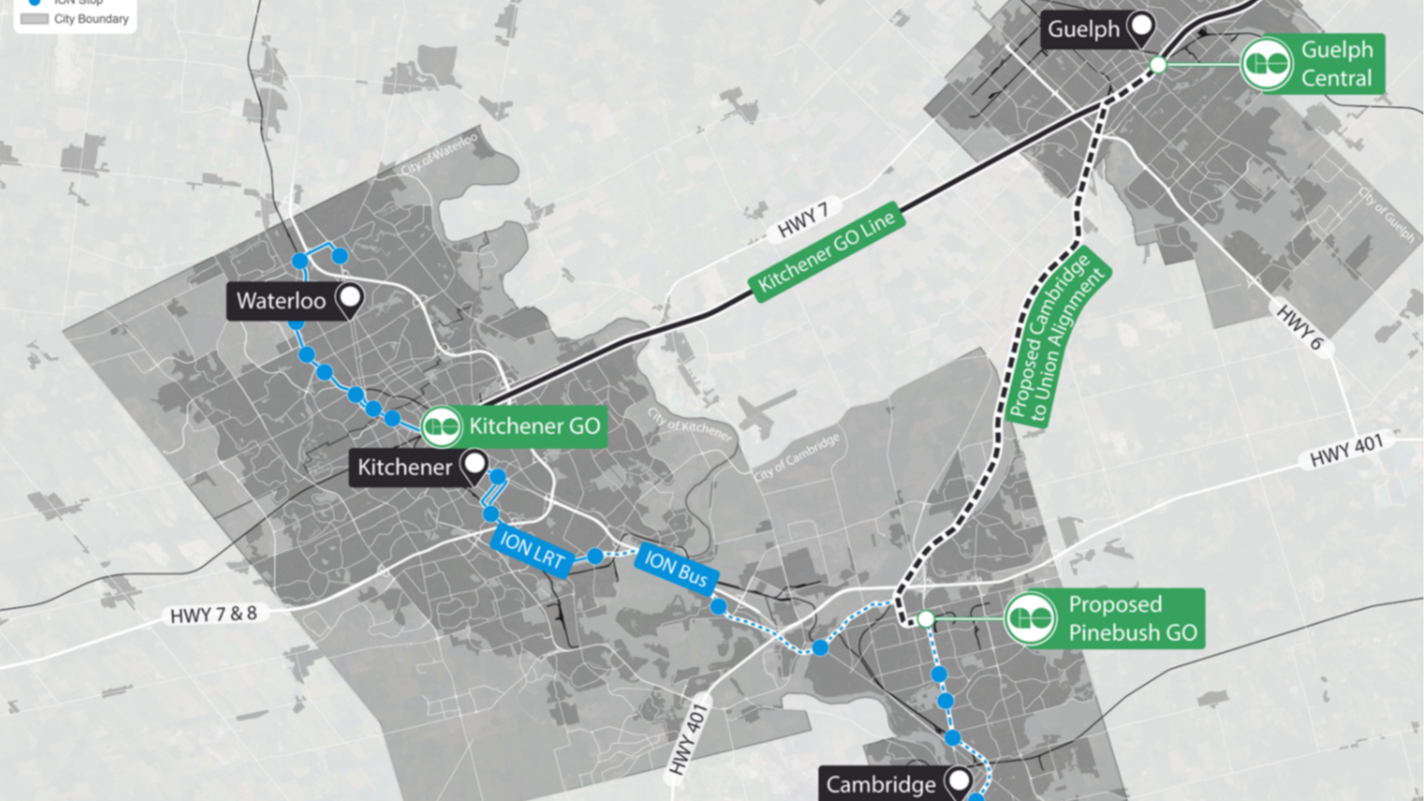
Per the 2024 initial business case for the project, the Region of Waterloo prefers a route through Guelph. This proposal would have a shuttle train from Pinebush to Guelph Central GO where passengers can transfer to the Kitchener Line for service to Brampton and downtown Toronto. While this proposal does not have a one-seat ride, it is much easier to construct and would likely have greater ridership.
First, the cost to implement this plan would be much lower than the Milton option. The trackage is owned by CN, but has few freight trains serving the remaining 1-2 industrial customers on the line. With such a section likely to be abandoned within the next few years, CN should be far more open to selling the line for a discounted price. Once track is purchased, the existing track can be upgraded to class 3-4 speeds allowing travel up to 130 km/h (80 mph) similar to much of the GO Network. This process would be straightforward and would not require expansive grade separations.
Second, Guelph and Waterloo Region share many economic ties and connecting the two is a highly valuable connection by itself: many workers and students from Guelph commute to Waterloo Region, and vice versa. Cambridge and Guelph in particular have more economic and travel ties than Cambridge and Milton do, and this project would attract people travelling directly between the two cities.
Third, travel times would remain competitive with the Milton line route despite the transfer. There are a variety of frequencies proposed for the line from half-hourly service (preferred) to hourly service. The full run from Cambridge to Guelph is expected to take only 15 minutes, meaning that only a few trains would suffice to provide this service. Currently, GO train service from Guelph to Union station takes 1h 30m though planned construction will reduce that to 1h 15m. Assuming a 5 minute transfer time, that would mean a trip time of 1h 35m, which is as fast as the fastest express Kitchener line train to Union. Given current track speeds of the Cambridge-Milton track and the ~1 hour it takes from Milton to Union, the Galt subdivision would take around 1h 30m, which is only slightly faster than the anticipated trip times using the Fergus Sub.
Because of these factors, Waterloo Regional Council has indicated that the Fergus Subdivision is their preferred route, with additional integration with ION Stage 2 at Pinebush station. A train line using the Fergus subdivision, if funding is approved soon and final planning is completed, could be built within 4-6 years.
Where to GO from here?
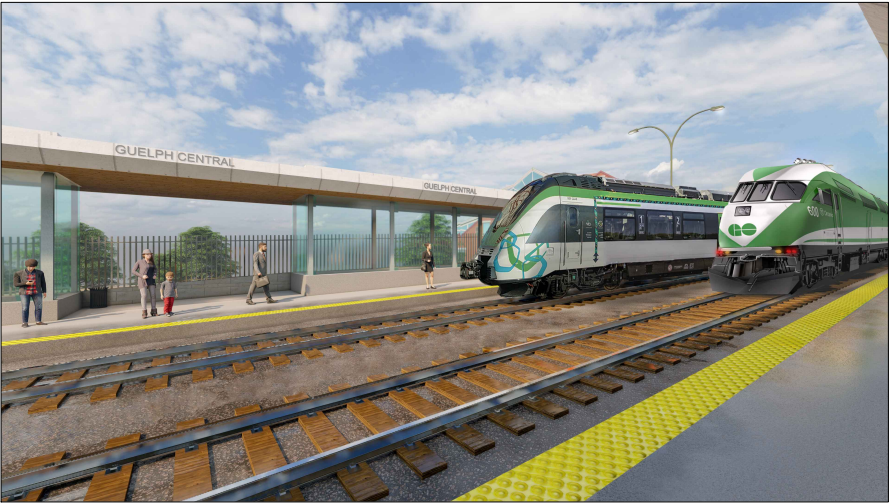
Ideally, Cambridge would be connected by passenger rail service on both the Galt and Fergus subs. However, from a practical planning perspective, the Fergus subdivision is our preferred route. The ridership projections, economic benefits to the region, and reasonable costs make this proposal ideal. We call on the Province to fund the proposal as a key element of the “GO 2.0” plan. While it may not be direct like an upgraded Milton route, the opportunity of inexpensive right of way and trackage is too big of an opportunity to pass up.
We do know that Metrolinx is currently in long-term negotiations with CPKC to improve or introduce GO train service on three main corridors: Milton, Bolton and Midtown. CPKC is not opposed to limited weekend service on the Milton line and GO is likely to introduce additional service on the Milton line in the near future. Though this might increase the attractiveness of the Milton corridor, cost challenges mean the Fergus subdivision would still remain the preferred option.
We have four additional recommendations that can be implemented alongside the core GO plan:
1) Saving the rail corridor
There are plenty of cases in Ontario where valuable rail corridors were not saved (Orangeville, Orillia, Kawartha Lakes). Rail was removed and the land was sold off or repurposed, losing the possibility of rail service forever. The Region of Waterloo should work with Metrolinx to immediately secure a broader Fergus subdivision corridor while the opportunity still exists, from the Delta in Cambridge to the junction in Guelph with the Kitchener Line. Purchasing the track or protecting the right of way now could prevent larger costs down the line, and obtaining the remainder of the corridor past Eagle Street to the Delta allows for future opportunities. Metrolinx and the Region already have a right of first refusal allowing them to purchase the line if CN wants to discontinue service – but without a plan, they could miss the window to act. The purchase of the Waterloo spur track allowed the ION to be built cost-effectively and to have higher speeds than most LRT projects. Likewise, the purchase of the Guelph subdivision track is what allowed for upgrades for 2WAD service on the Kitchener GO line.
2) Starting with a bus route
Before trains hit the tracks, bus service should begin first as a stepping stone: A new GO bus route from Cambridge to Guelph with some strategic stops in Cambridge’s cores and in Guelph would help establish travel patterns and demonstrate demand for future rail service.
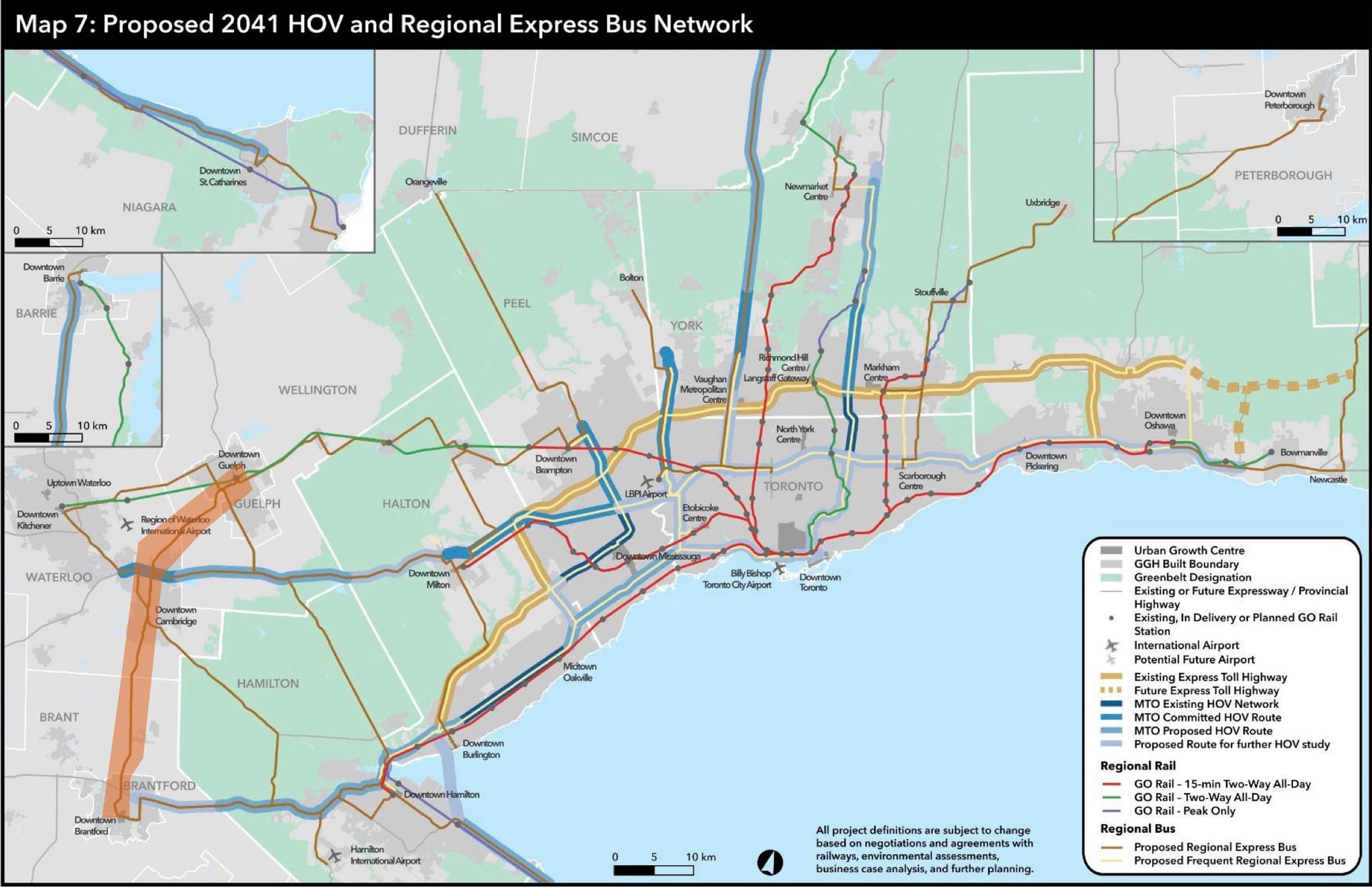
In 2021, Link the Watershed proposed local agencies fill the gap with bus service between KW, Cambridge and Guelph, though there has been little movement on the concept. The province's 2041 regional transportation plan includes KW-Cambridge-Hamilton and Guelph-Cambridge-Brantford rapid express buses. Due to GO’s recent bus shortage, the largest step toward this goal so far has been the introduction of GO Route 17 (Waterloo-Guelph-Hamilton) – which is welcome but doesn’t serve Cambridge.
The Region of Waterloo formally requested GO Transit to provide Cambridge-Guelph bus service as part of its 2024 Cambridge GO project, and this would be a welcome next step.
3) A long term vision of better regional connections
The initial Cambridge-Guelph service could act as a starting point of either of two long term visions:
a) Sending trains from Cambridge to Toronto without transfers once rail track capacity upgrades are completed on the Kitchener line.
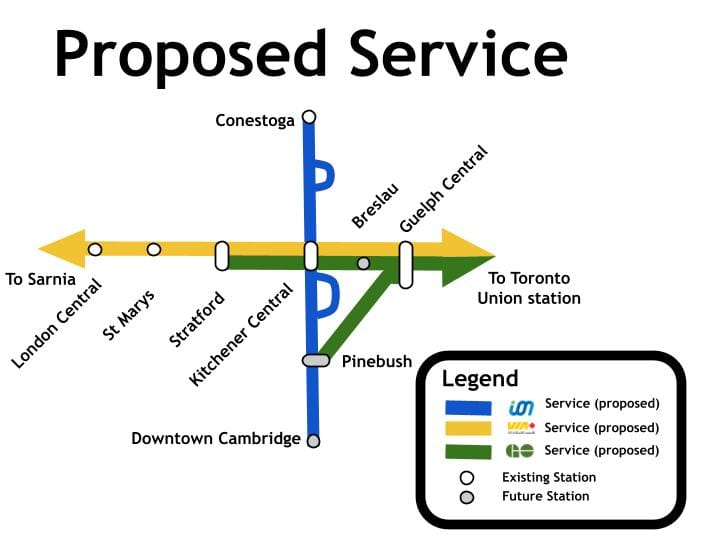
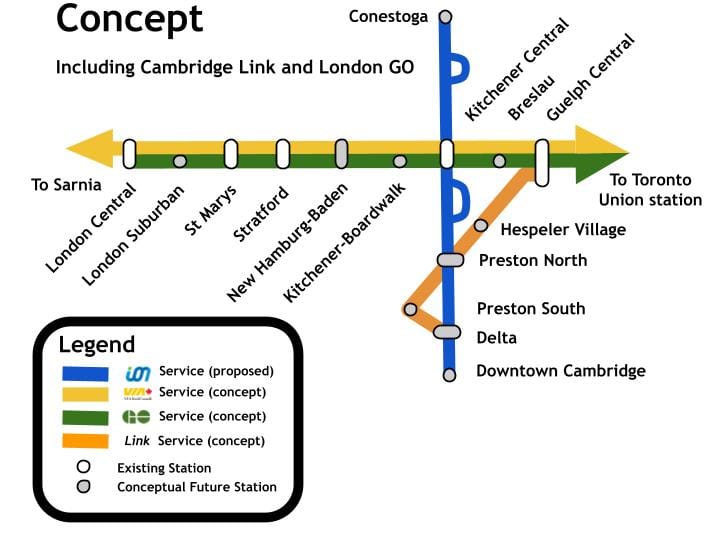
b) An ambitious 15-minute all-day local service similar to train line 2 in Ottawa (which we dub the “Cambridge Link”). Local trips generate higher ridership than intercity ones, and there is a lot of travel demand between the three town centres of Cambridge. Thus, stops could be added in Downtown Galt, Preston Town Centre, and Hespeler. Lands for a Preston Station near Eagle Street (near the future Preston ION station) and a Galt station (at the proposed Delta ION Station) should be reserved. The Grand River Railway previously connected these 3 town centres until the 1950s so there is a local precedent for this type of service.
Regardless of the end vision, we believe a station in Hespeler Village should definitely be considered. Coordination with future projects such as Stage 2 of ION will also be important for connectivity. Building these systems together rather than separately could create an integrated regional network.
4) Planning Transit with Development
Finally, the City of Cambridge should ensure that the project is coordinated with development along the corridor. There are thousands of units approved along the Fergus subdivision, most notably at Cambridge SmartCentres (close to the Pinebush terminus), Queen St, the Silknit Factory, Downtown Preston and in Downtown Galt. Properly planned transit-oriented growth can reduce traffic pressures.
Provincial funding for Cambridge GO would create connections that support both regional mobility and future growth.
Appendix: links and additional resources
Saved reports and studies on our shared drive
Region of Waterloo EngageWR page for the 2024 Cambridge GO study