Backgrounder on IONizeWR
Across Canada and the US, the cost of building transit has exploded, far outpacing inflation and global norms. Reasons include over-engineering, insufficient in-house project management, and high “risk premiums” in public-private partnerships (P3s) that drive up costs without delivering better outcomes. The result is not enough transit getting built for the amount of money being invested. In other high-cost jurisdictions, the amounts of money North American cities spend per-kilometre to get light rail lines would pay for fully grade-separated automated subway lines.
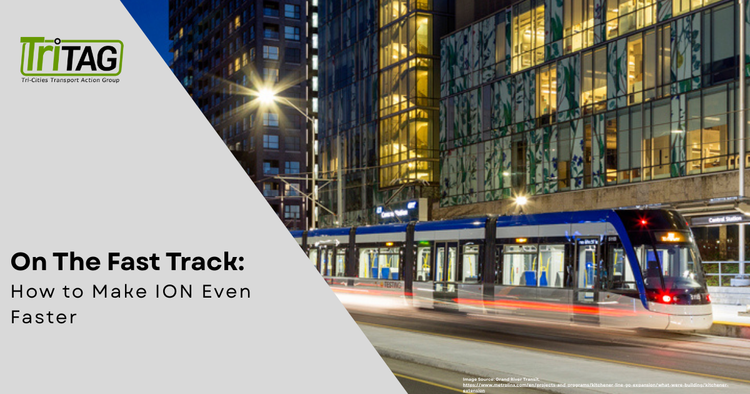
The 19-kilometre ION Stage 1 came in at a capital cost of $818m in 2014. It was the largest infrastructure project for Waterloo Region, but in retrospect, it’s one of the last transit projects in Canada with a reasonable per-kilometre cost. It’s not rocket science to build transit for reasonable costs – we did it before, and we can do it again.
What worked for ION stage 1? We believe some of the factors are:
- Dedicated in-house rapid transit team with project managers, engineers, and other experts
- Focus by staff and a Regional Committee on getting costs down – in part because the Region had skin in the game with a local property tax share of capital costs
- Separation of project components to optimize contracts, including some utility relocations prior to the main construction contract and joining the Metrolinx order for light rail vehicles
- Limiting project scope and using simple, repeatable designs for stations
ION stage 1 was itself largely a P3, however the Regional project team applied a lot of its own expertise in developing the Request for Proposals and then crafting the agreement itself.
The most recent cost estimates for Stage 2 ($4.46b in 2022 dollars) are several times higher than earlier ones ($1.36b from circa 2019), and they seem to reflect the escalation in costs in other North American transit projects rather than specific needs of our Stage 2 project. Some increase can be expected with a more challenging Stage 2 route, but not 3-fold.
If we can get over 4 billion dollars of funding from the provincial and federal governments, let’s build more transit with it.
Links
- Stage 2 ION
- Citizens for Cambridge’s extensive FAQs on ION Stage 2
- Transit costs
- Oh the Urbanity – How This Small City Built Light Rail For Cheap (video about ION Stage 1)
- Understanding the Drivers of Transit Construction Costs in Canada: A Comparative Study
- Transit Costs Project: Understanding Transit Infrastructure Costs in American Cities
- Station to Station: Why Subway-building Costs Have Soared in the Toronto Region
- ION stage 1